If you want to be a Cubist, you gotta deal with the big guy. That’s right, PABLO PICASSO. He co-invented the language, and as VP in charge of all things new, ie. product development, he got to make the rules. I can think of very few other Cubists who did much to advance the language of Cubism, particularly the portrait. Many traveled the trails he blazed, but during his lifetime anyway, they mostly stayed on or near those trails.
So I too have begun with Picasso. Starting from a known point and advancing into the unfamiliar is the recipe for abstraction, as it is for all inventions, I suppose.
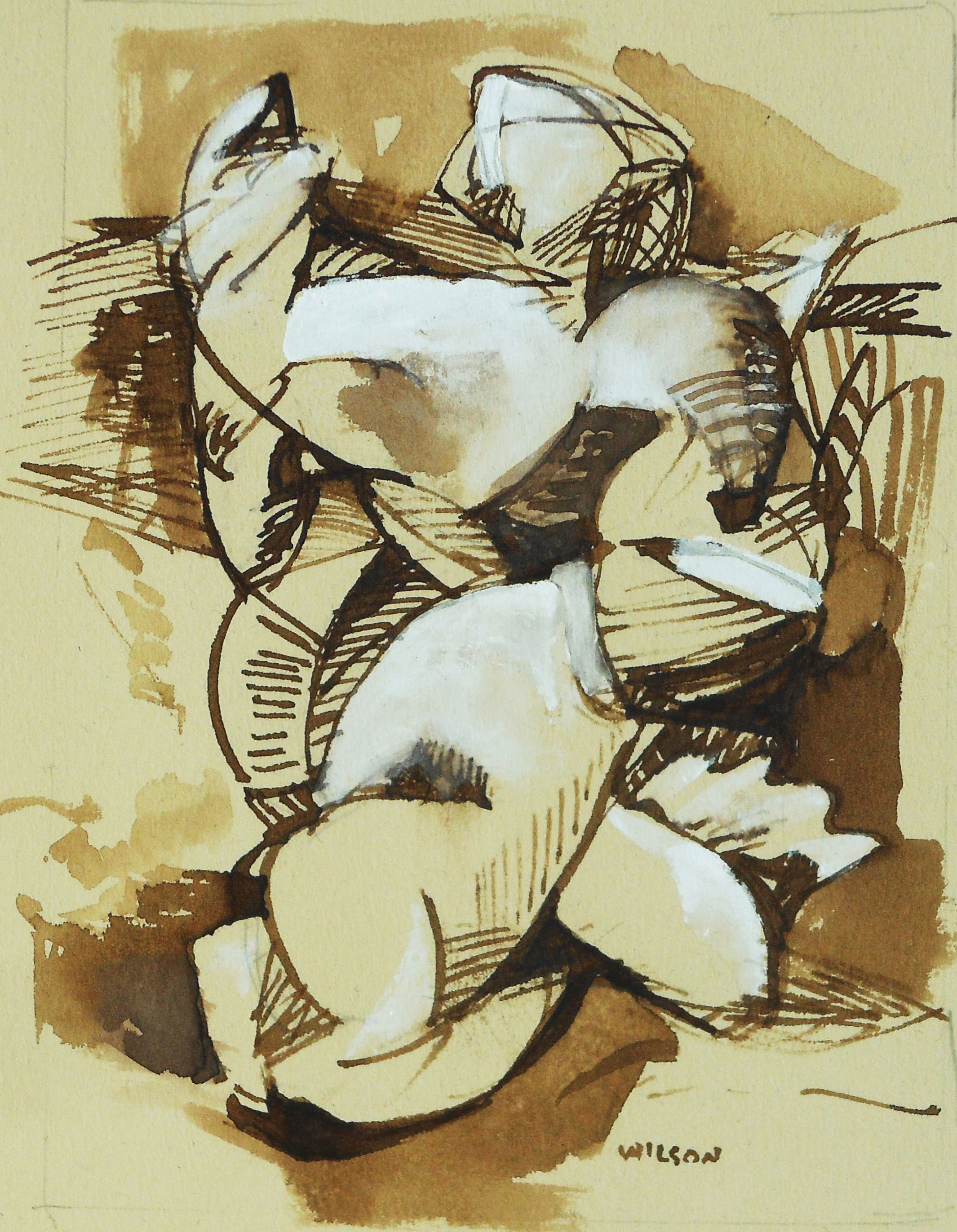
“Dulcinea #3” ink wash and pencil on paper,
5″ x 7.5″ by MBWilson
These 91 Paintings and drawings may begin as emulations of Picasso (since he is the only one of the originals to emulate), but like like a teenager still living at home, I can’t wait to get out of the known world of Cubism and into something that I don’t know.
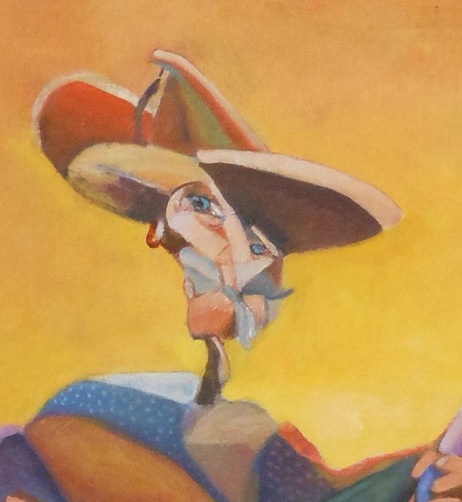
“Don Quixote Wearing Chaps”, detail, oil on canvas by MBWilson
The language of cubism began pretty narrow, and was dominated by Picasso.
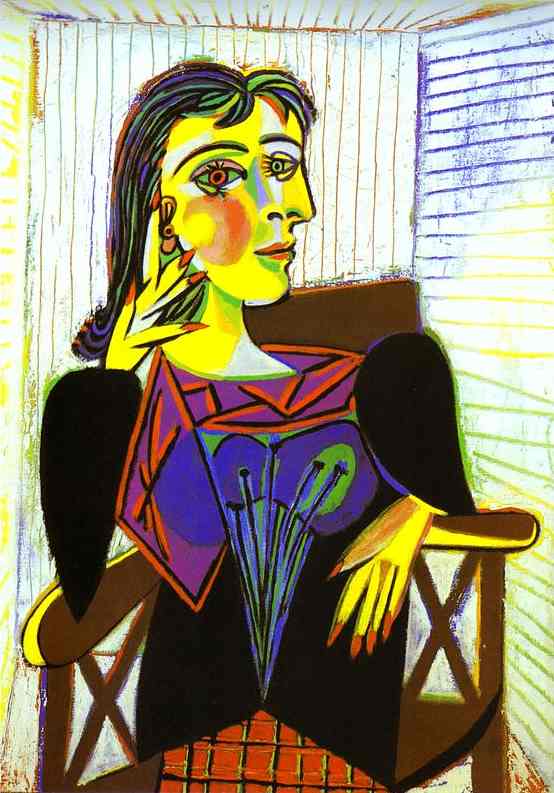
“Dora Maar” by Picasso
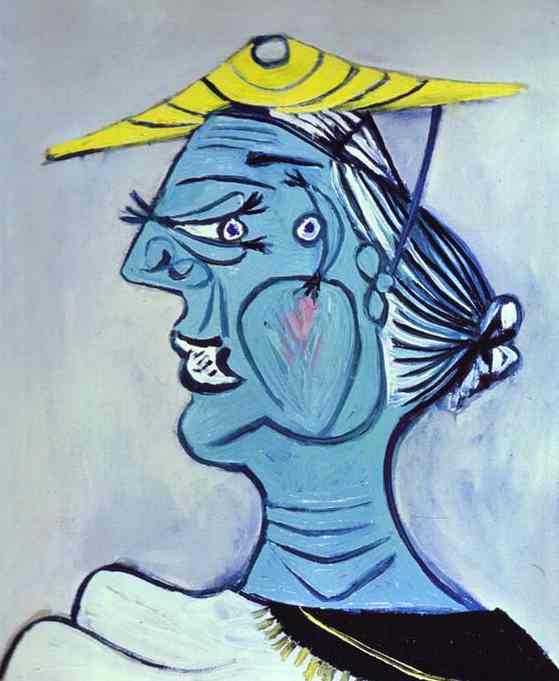
“Woman with Hat” by Picasso

deChirico joined modestly and briefly;

Chagall borrowed from cubism in his youth,
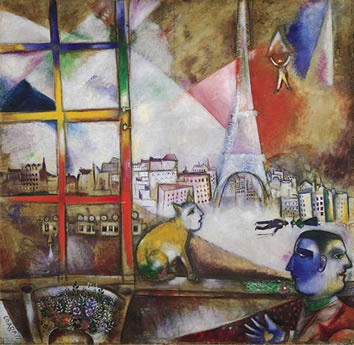
“1913, Paris” by Marc Chagall
but soon developed his own lexicon, which he never really left;
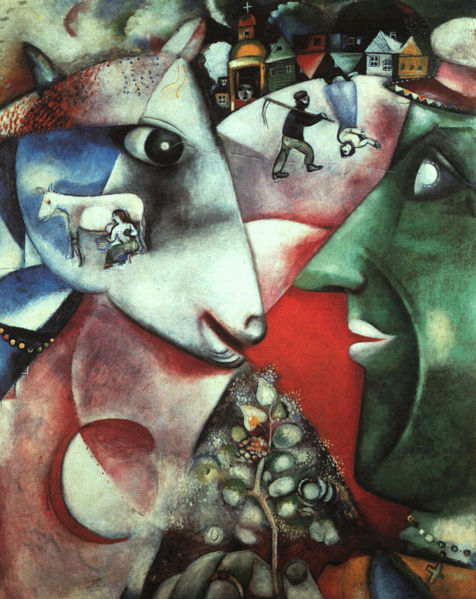
“I and The Village” by Marc Chagall
And Juan Gris just ran out of time…
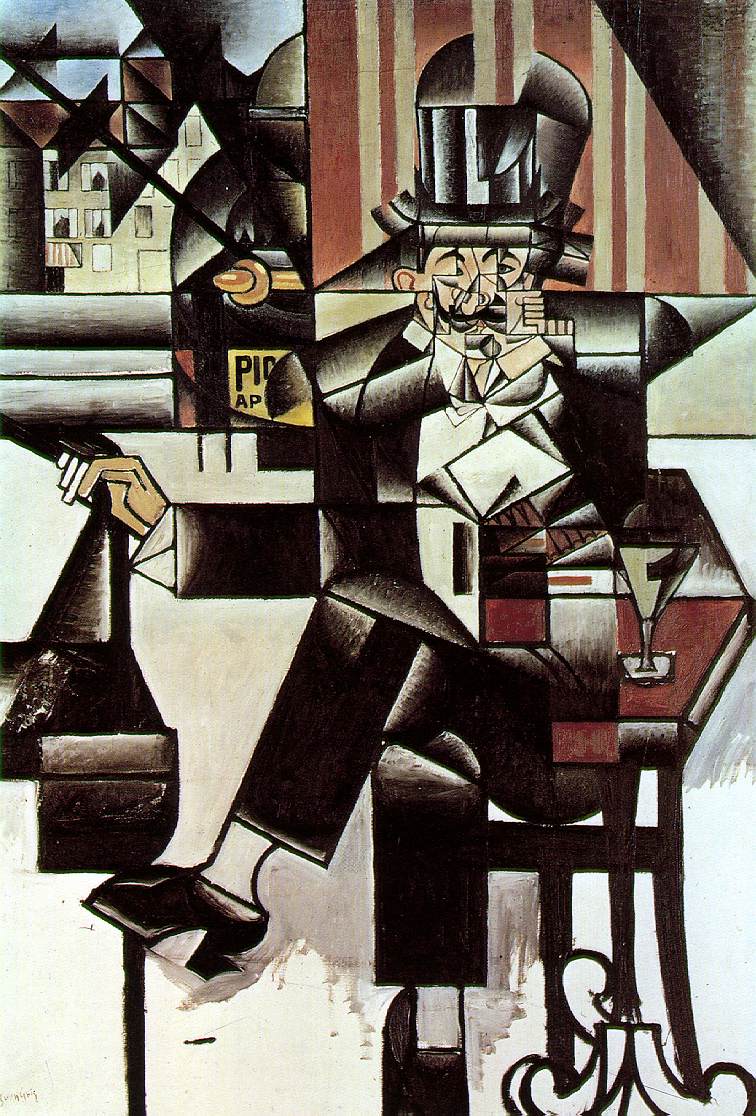
“Man in the Cafe” 1912 Juan Gris
Oil on canvas, 128.2 x 88 cm; Philadelphia Museum of Art
So, to learn the language in order to advance the vocabulary?
Perhaps, but Cubism strikes me as a language that is a pure strain, incapable of reproducing itself, that lives and evolves only as a hybrid.

 mbwilsonart